Austin & Central Texas
Our crew of IICRC-certified technicians dries wet walls, floors, subfloors, and slabs in Austin homes and businesses. We use air movers and dehumidifiers and take moisture readings each day until the structure is dry.

Total Restoration of Texas is an independently and locally owned water damage restoration company with offices in North Austin and Belton. We provide structural drying and dehumidification for homes and businesses across Austin and Central Texas. We're an IICRC Certified Firm.
Structural drying means drying the building materials themselves, including drywall and the wall cavity behind it, wood floors, subfloors, and concrete. We start structural drying after we remove standing water through water extraction. Water soaks into these materials and under flooring, so a surface can look dry while the material remains wet.
The EPA says that in most cases, mold won't grow on wet or damp materials if they're dried within 24-48 hours of a leak or spill. The Texas Department of Insurance says mold can start growing within a day after a leak. The longer water sits, the farther it moves into walls and flooring.

Working as a set, air movers speed drying, dehumidifiers remove moisture from the air, and meters and cameras show progress. We place the equipment in each room based on what got wet.
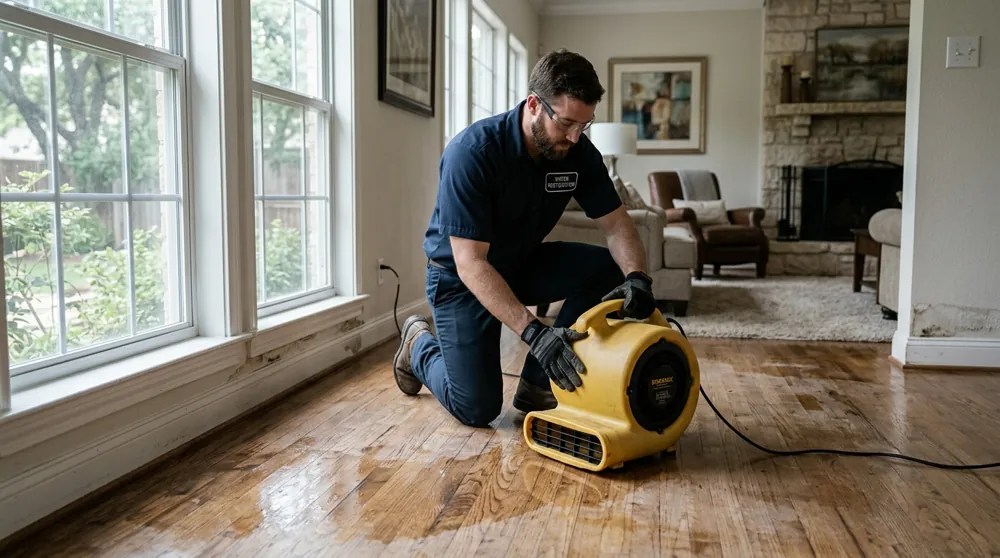
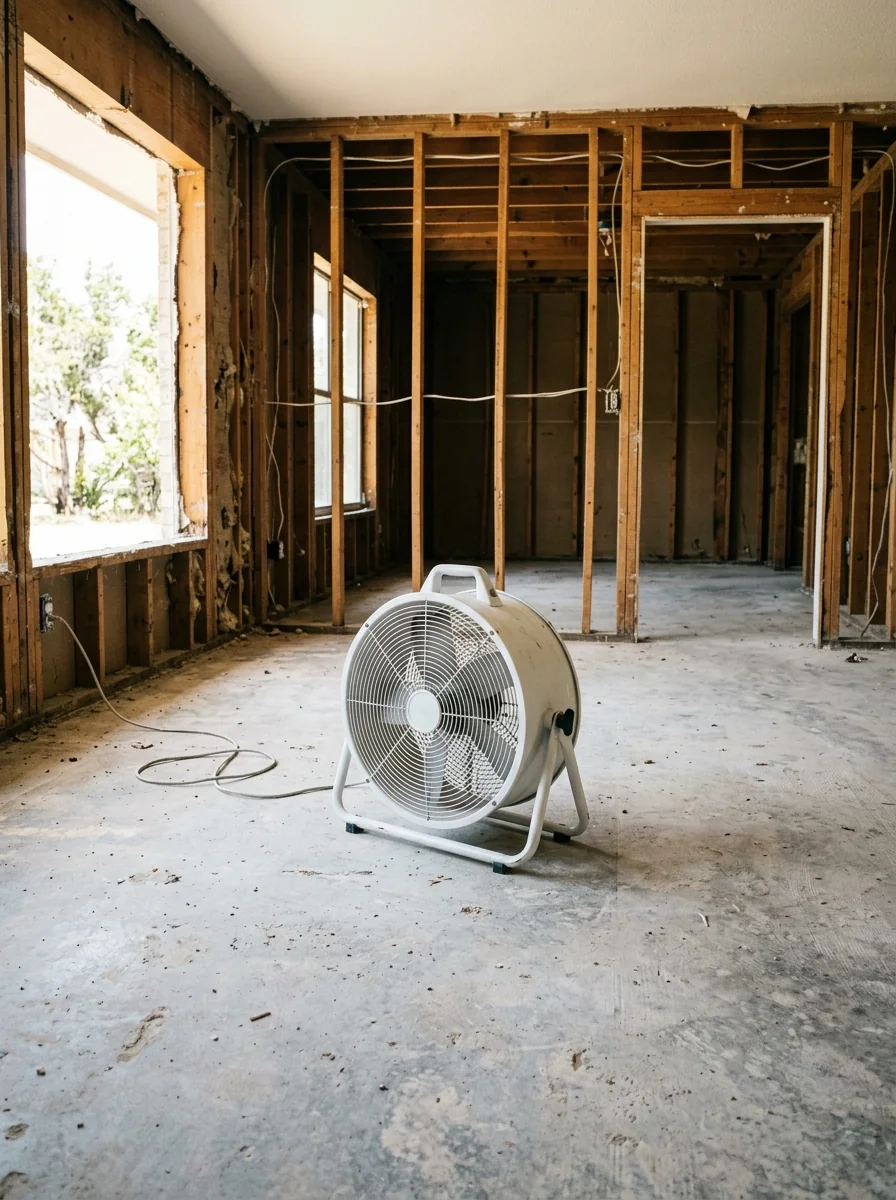
We use industrial air movers to push air across wet carpet, floors, and walls, so those surfaces dry faster. Household fans used too early can push moisture deeper into walls and flooring.
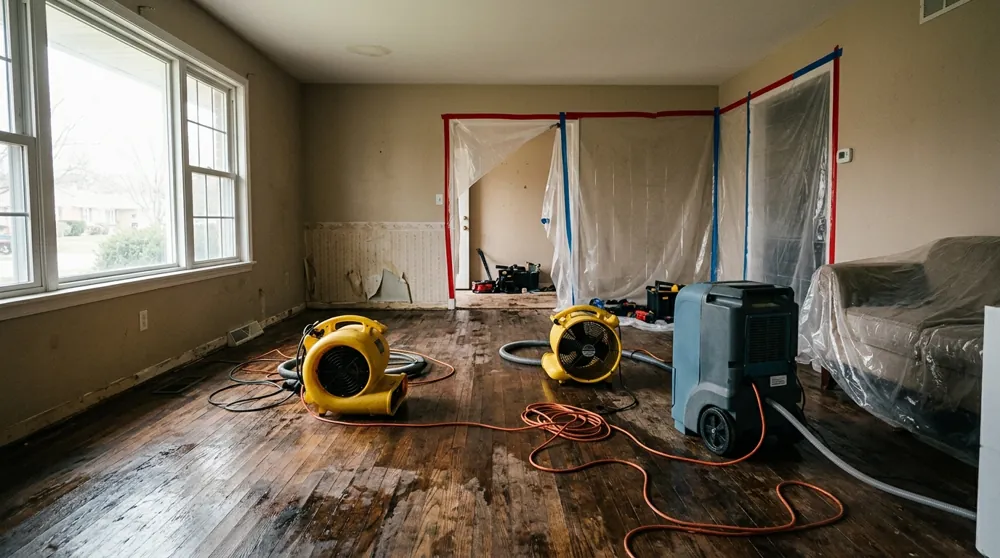
Dehumidifiers pull moisture out of the room's air, so lower humidity lets wet materials keep drying. EPA guidance for homes calls for indoor humidity below 60 percent, ideally 30 to 50 percent.
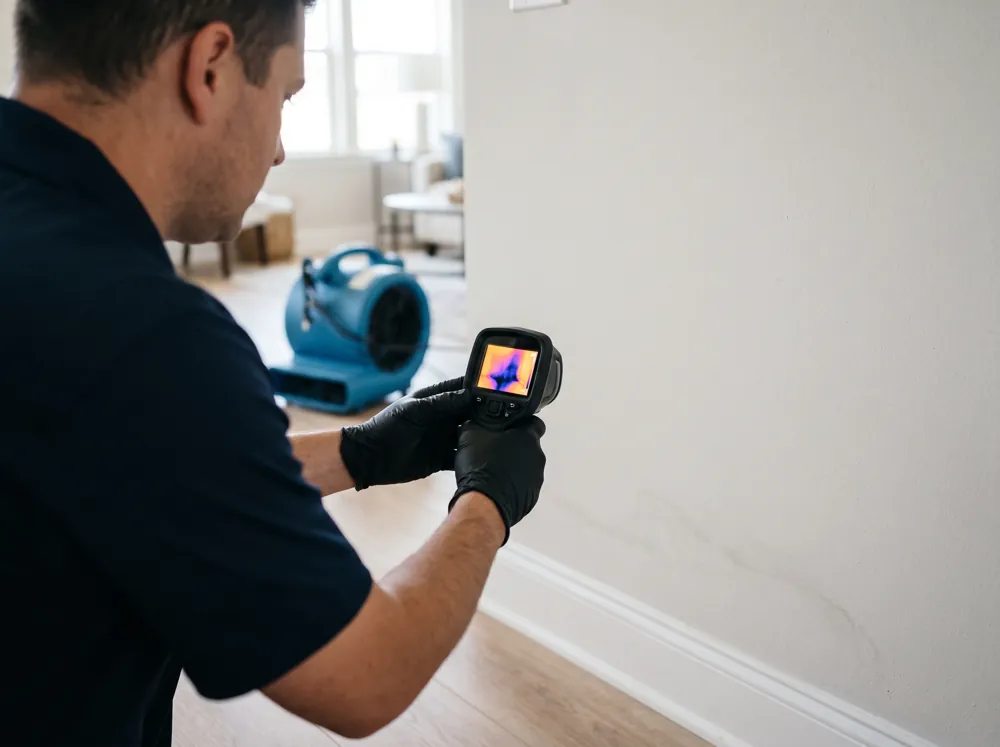
We use infrared imaging cameras and calibrated moisture meters to read moisture inside walls, ceilings, and flooring, so we don't need to cut them open for those readings. Moisture meters work on carpet, drywall, wood, brick, and concrete, and we use them to track drying as it happens.

We don't have to tear out every wet material, because what we can dry in place depends on the material and how wet it is. These guidelines cover clean water. We handle materials soaked with sewage or other dirty water differently.
We set drying targets at the start of the job so we have numbers to work toward. We take readings each day with moisture meters and infrared cameras until the structure meets those targets. We don't close anything up with new drywall or flooring until the numbers show it's dry.
We share the readings with you at each visit so you know where the drying stands. We keep those readings in our record of the damage and the work from day one, so the record supports your insurance claim.


Total Restoration of Texas handles water extraction, structural drying of wet building materials, mold containment, and the complete rebuild. The expert you meet when you first call stays with you until the job is done, and our emergency line is staffed 24 hours a day, 7 days a week, including holidays.
We're an IICRC Certified Firm, company #223307. Ryan Cook holds IICRC registrations in Applied Structural Drying and Water Damage Restoration, and every technician on your job is trained and certified by the IICRC.
We keep the same crew on your job throughout and don't use subcontractors. Once it's dry, our crew handles demolition, framing, drywall, flooring, and finish work.
We document the damage and our work from day one, and we build your estimate in Xactimate, the same software your insurance adjuster uses. We bill your insurance company directly.
What Austin homeowners say
“Ryan is a legend! Half my house flooded and the flooring, baseboards, and door frames had to be removed. He was at my place within an hour with all the equipment and info on how to file an insurance claim, then turned up the next day with a team to get things going. His communication is on point. So reliable. Saved my sanity!”

 Google review
“Call Ryan with Total Restoration if you ever have a water issue at home or the office. I've used them three times and each time Ryan and Jason responded quickly, same day on the job. They work seamlessly with my insurance and were compassionate toward my tenants. Even my insurance adjuster said he loves working with this company.”
 Google review
“I can't say enough about how Total Restoration of Texas helped me through the remediation process after the water heater in my attic leaked. I had used a big franchised company before, but by the time they called me back, Total Restoration had already completed the project. Their crew, led by Ryan Cook and Daniel, was amazing.”
 Google review
Drying comes after we extract the water and before we make repairs, with moisture readings setting the pace for the work.
We use extraction equipment first to remove standing water from carpet, pad, hard floors, and concrete.
We use infrared cameras and moisture meters to show where water went inside walls, ceilings, and floors. We photograph and document the damage for your claim.
We remove swollen drywall, wet insulation, ceiling tiles, and carpet pad that can't be dried so air can reach the wall cavity and subfloor.
We place air movers and dehumidifiers based on which rooms got wet and which materials in those rooms need to dry.
We take moisture readings each day and compare them with the drying targets we set at the start. As areas dry, we adjust or move equipment.
When moisture readings meet the drying targets, our crew replaces drywall and flooring and finishes the repairs.
With offices in North Austin and Belton, we provide structural drying and water damage repair for homes and businesses across Austin and nearby Central Texas towns.
Structural drying FAQ
How long drying takes depends on how much water there was, what got wet, and how long it sat. Some materials dry slowly, and upholstered furniture, for example, can be hard to dry completely within 48 hours. We set drying targets at the start and take readings each day, so the job moves to repairs when the readings meet those targets.
A small, slow drip that isn't under pressure may be something you can handle yourself, and our guide to cleaning up water damage covers that decision. For bigger leaks, household fans can't do what professional drying equipment does, and drying done wrong pushes moisture deeper into walls and flooring and can complicate your insurance documentation. Never run fans on water that might be sewage or otherwise dirty.
We use infrared cameras and moisture meters to read moisture inside the wall before cutting anything open. We can dry drywall in place if there's no obvious swelling and the seams are intact. We replace drywall that doesn't meet those conditions and any wet insulation behind it.
Per the EPA, mold usually won't grow when wet materials are dried within 24-48 hours. Mold growth may already have occurred even if materials are dried within 48 hours, so fast drying lowers the odds, though no one can promise mold won't grow. If mold has started, that's remediation, and we hold a Texas license for mold remediation and do mold removal too.
We remove moisture from hardwood floors right away, then use dehumidifiers and fans, applying gentle heat with care on the hardwood. We dry the subfloor under the boards too, and we take readings on both the boards and subfloor each day. We replace boards that can't be saved during the rebuild.
The Texas Department of Insurance says most homeowner and renters policies cover sudden and accidental water damage, like a burst pipe or broken washer hose, and damage from gradual leaks usually isn't covered. Floods need a separate flood policy. We build your estimate in Xactimate, the same software your adjuster uses, and bill your insurance company directly. Most customers pay only their deductible.
Our IICRC-certified crew handles structural drying, dehumidification, and repairs across Austin and Central Texas. We're on call 24/7, and we work directly with your insurance.